Quantum Computers don’t run on Magic
They run on chips. And that simple fact is bringing two of Germany's most innovative regions closer together than ever before.
While Saxony has spent more than three decades building one of Europe's most powerful semiconductor ecosystems, with more than 700 companies and research institutions clustered around Dresden, Lower Saxony has emerged as one of Germany's leading quantum technology regions. Through Quantum Valley Lower Saxony, together with Physikalisch-Technische Bundesanstalt, PTB, Leibniz Universität Hannover and Technische Universität Braunschweig, the region has established internationally recognised expertise in quantum computing, quantum sensing and enabling technologies, particularly in the field of trapped-ion quantum computing.
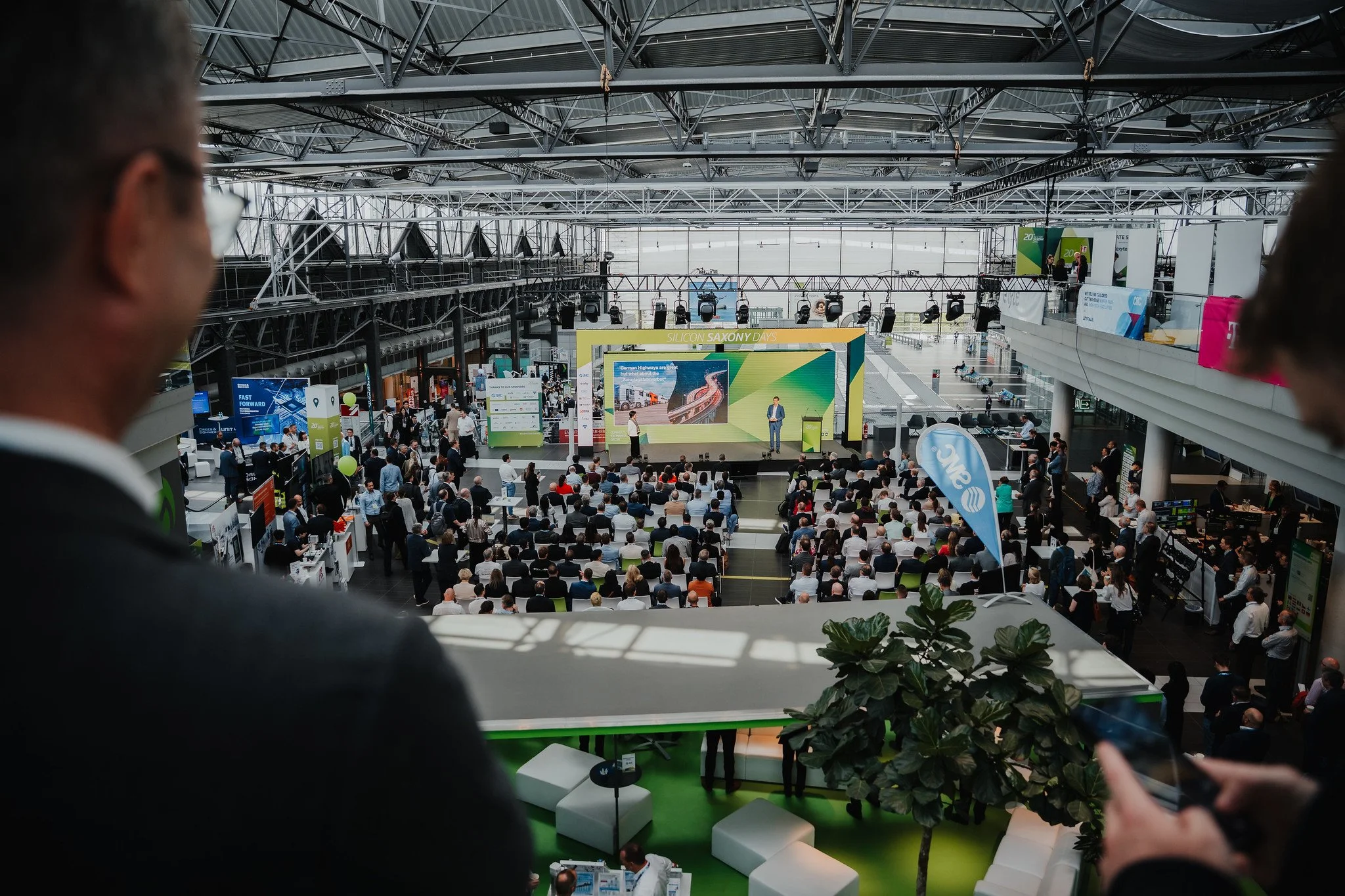
Celebrating its 20th anniversary, the Silicon Saxony Days 2026 brought together leaders from across Europe's semiconductor and deep-tech ecosystem, including representatives from Infineon Technologies, GlobalFoundries, Bosch, X-FAB, the European Commission, international innovation organisations and research institutions from around the world.
On the main stage, our CEO Naz Pourmalek joined Thomas Richter from Infineon and Ole Gerkensmeyer from Nexperia to discuss why high-tech projects fail and what it takes to prevent it, alongside other leading voices including Pierre Chastanet, Head of Unit for Microelectronics and Photonics at the European Commission, and Emma Tsai from STIPC Taiwan and many other leading voices from industry, research and policy.
Across three days of discussions, one message became increasingly clear: the boundary between semiconductors and quantum technologies is becoming thinner every year. Future quantum systems will depend on advanced chip manufacturing, photonics, packaging technologies and highly specialised supply chains. At the same time, quantum technologies are opening up new opportunities for innovation across the semiconductor sector.
The connection between Saxony and Lower Saxony reflects this convergence. Both regions are supported through the Federal Ministry's #Clusters4Future programme, with SEMECO Cluster in Saxony and QVLS-iLabs in Lower Saxony. Lower Saxony further strengthens its position through the Deutsche Forschungsgemeinschaft (DFG) - German Research Foundation Clusters of Excellence QuantumFrontiers and Cluster of Excellence PhoenixD: Photonics, Optics, and Engineering - Innovation Across Disciplines, creating a unique environment where fundamental research, technology transfer and industrial application come together.
Many thanks to Frank Bösenberg, Managing Director of Silicon Saxony, and Stefan Uhlig, Deputy Managing Director, for delivering such a strong 20th anniversary edition and for creating a platform that continues to connect Europe's semiconductor and quantum communities.